
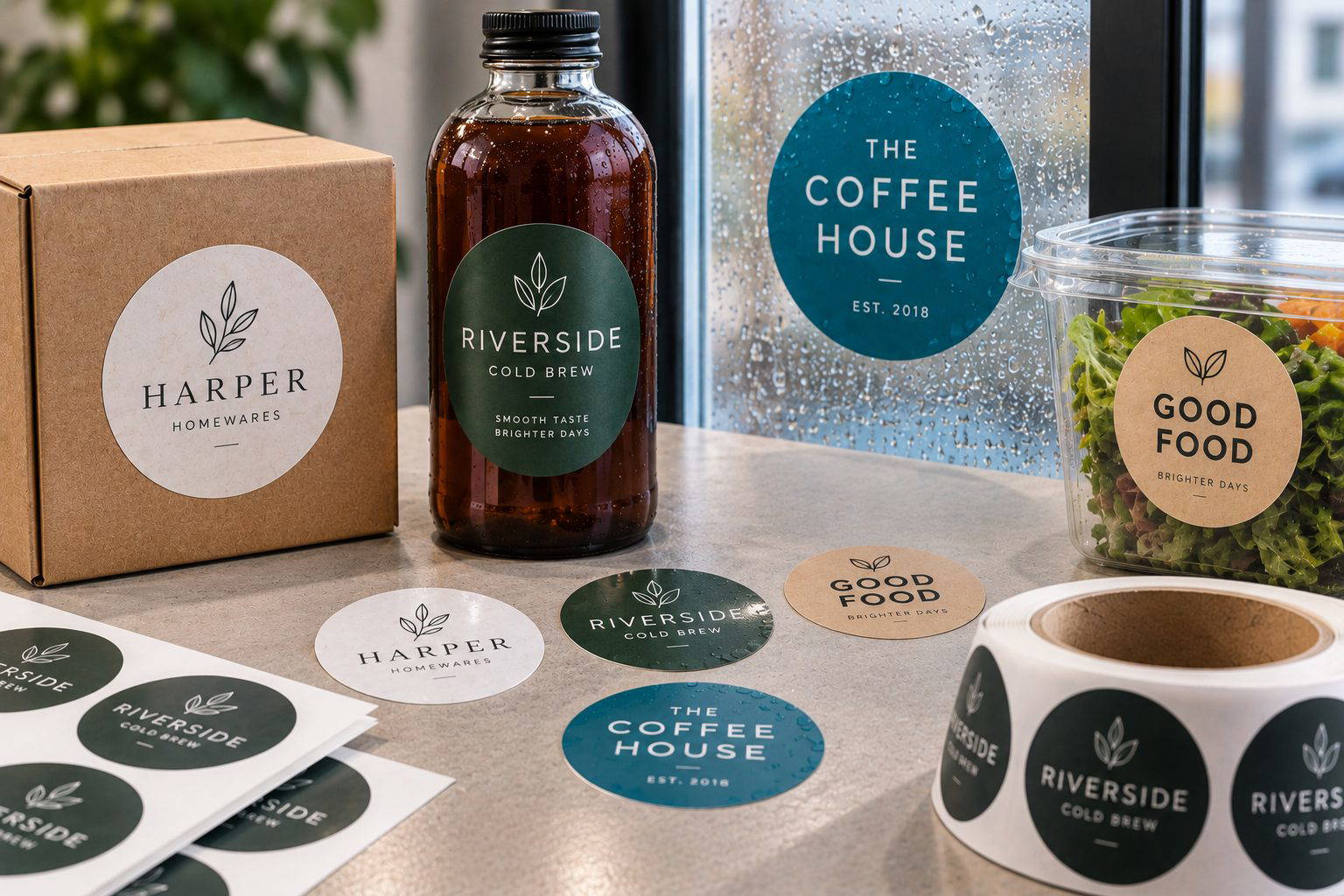
Choosing a sticker material starts with one simple question: where will it be used? A label applied to an indoor presentation box has a very different job from a sticker placed on a shop window, chilled container or frequently handled product.
Paper labels are often a sensible and economical choice for dry indoor applications. If the sticker could encounter moisture, regular handling or outdoor conditions, vinyl will usually provide the more reliable result.
Paper or vinyl?
Paper stickers work well on cartons, boxes, envelopes and product packaging that will remain indoors. They print cleanly, feel familiar and keep costs practical for larger quantities.
Vinyl is better suited to demanding applications. It resists moisture and scuffing, making it a stronger choice for window graphics, equipment labels, bottles and products that may be stored or transported in damp conditions.
Some jobs benefit from using both. A café might choose paper labels for takeaway packaging but order vinyl stickers for its windows or reusable containers.
Choosing the right adhesive
The adhesive matters just as much as the printed material. Permanent adhesive is suitable for product labels, parcel identification and stickers that should remain firmly in place. Removable adhesive is useful for temporary promotions, events and window displays where clean removal is important.
High-tack adhesive can help with textured cardboard, certain plastics and cold or condensation-prone items. If a standard label keeps lifting at the corners, the surface or application temperature may be the real problem.
- Permanent: product packaging, barcodes and long-term identification
- Removable: temporary promotions and short-term window graphics
Matt, gloss and protective finishes
A matt finish has a restrained appearance and is easier to read beneath bright lighting. Gloss gives colours and photographs more impact, which can help products stand out on a shelf.
Lamination is worth considering when stickers will be handled frequently, exposed to moisture or wiped clean. It may be unnecessary for carton seals, address labels and short-lived promotional stickers, so it is worth matching the finish to the actual use rather than adding it automatically.
Preparing sticker artwork
Supply artwork in CMYK where possible, as RGB colours shown on a screen can appear brighter than the printed result. Vector artwork is preferable for logos and small details because it keeps edges crisp at different sizes.
Small text needs enough size and contrast to remain readable. QR codes also require clear space around them and should be tested at the finished size before the full quantity is produced.
If the labels will be applied by machine, tell us before production. Roll direction, spacing and core size may all affect whether the finished labels work with your equipment. For hand application, a little extra margin around the design can make positioning easier.
Need help choosing your sticker material?
Tell Melbourne Print where the sticker will be used, what it will be applied to and whether it needs to withstand moisture or regular handling. We can recommend a suitable material, adhesive and finish for the job. Contact Melbourne Print or email our team with your requirements and artwork.