
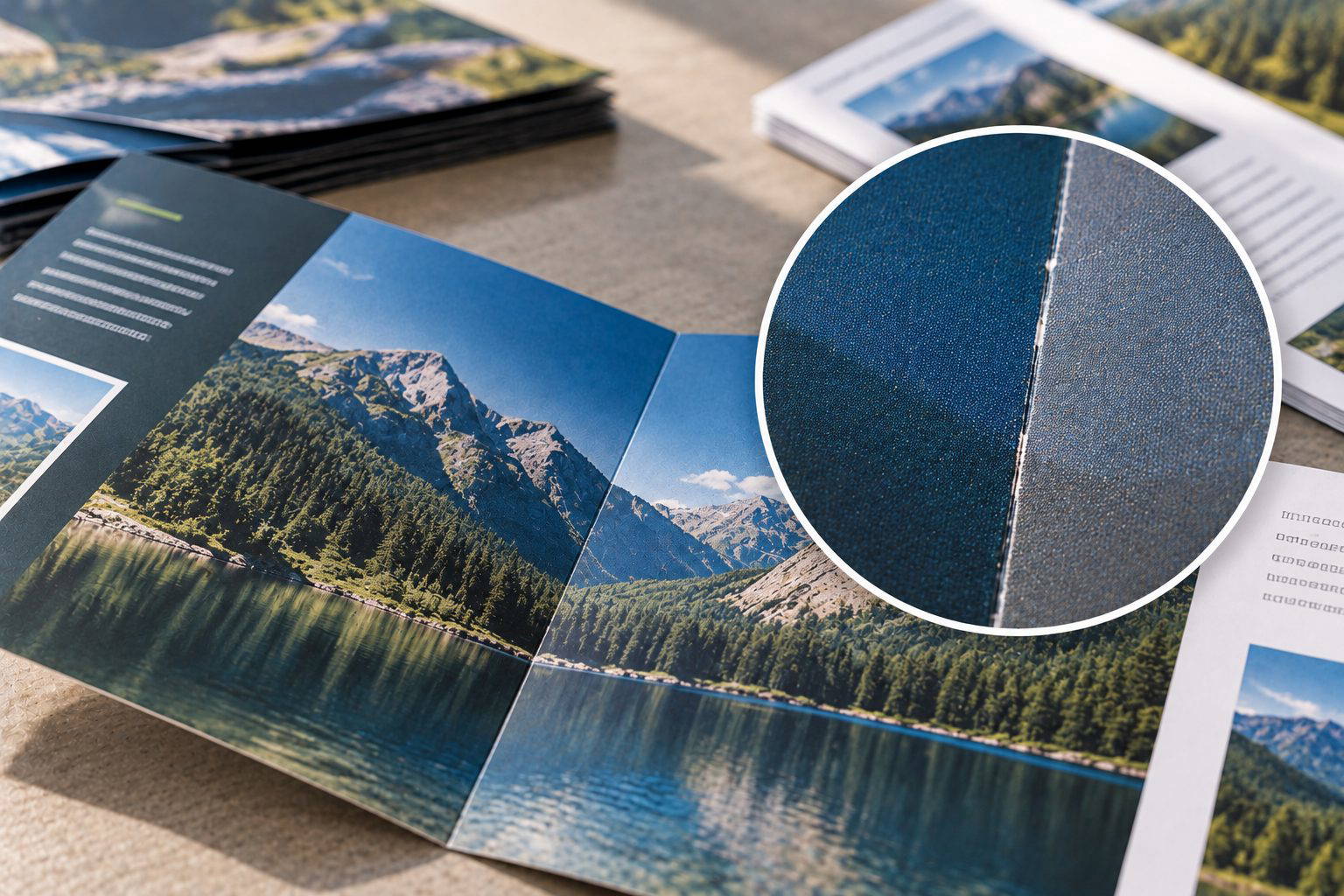
A folded leaflet can look perfect on screen and in the proof, yet show fine white lines across the fold once it has been produced. This is known as fold cracking. It is more likely when a dark image, solid colour or heavy design runs directly across a sharp fold, particularly on thicker stocks.
Why can folded print crack?
Folding puts pressure on the printed surface. If the stock is thick, the fold is tight or there is a lot of dark coverage in that area, the surface can split slightly and reveal the lighter paper underneath. The result is most noticeable on dark photographs, solid black areas, deep blues and other strong colours.
It can happen on both coated and uncoated papers. A heavy folded flyer with a dark background is more at risk than a lighter design with plenty of clear space around the fold.
How to reduce the risk in your artwork
Keep important details away from the fold
Where possible, avoid placing small text, barcodes, faces, logos or strong dark panels directly over the fold. Moving a dark section just 2 to 3 mm away from the crease can make the finished piece look much cleaner.
Allow room for the fold
Do not place important information too close to the crease. This gives the fold a little breathing room and makes the finished leaflet easier to read and handle.
Ask about scoring for thicker stocks
For heavier leaflets, cards and folded covers, scoring before folding can help produce a cleaner and more controlled result. It is particularly useful for stocks around 250gsm and above, or for designs with dark coverage running near a fold.
If you are unsure which fold or stock will suit your job, it is worth discussing this before the artwork is finished. A small change to the paper, fold or layout can make a noticeable difference.
A quick check before sending your artwork
- Keep dark photos, solid fills and important details away from the fold where possible.
- Leave enough space around the crease for the leaflet to fold neatly.
- Consider scoring when using thicker paper or card.
- Check that text, logos and barcodes will not sit directly on the fold.
- Confirm the fold direction and finished size before approving the artwork.
Want advice before ordering folded print?
Tell us what you are producing, which stock you are considering and how it needs to fold. We can recommend a practical specification and flag any artwork details that may affect the finished result. Talk through your project.